The topography of Nepal presents one of the most challenging construction environments on earth. From the towering Himalayan slopes to the densely populated Kathmandu Valley and the Terai plains, infrastructure development has historically been constrained not by ambition but by logistics. Transporting and placing concrete in sites perched on unstable hillsides, navigating narrow urban alleyways, or building in remote earthquake-affected villages has demanded methodologies beyond conventional heavy equipment. In response to these formidable geographic constraints, a specific class of machinery—the small concrete pump—has emerged as a transformative agent. These compact, highly mobile units are not merely tools; they are enablers of a decentralized, resilient construction paradigm that is fundamentally reshaping how Nepal builds its schools, roads, bridges, and homes. Their proliferation marks a significant evolution in the nation’s engineering capacity and its ability to deliver durable infrastructure to its most inaccessible communities.
Navigating Verticality and Inaccessibility: The Topographic Imperative
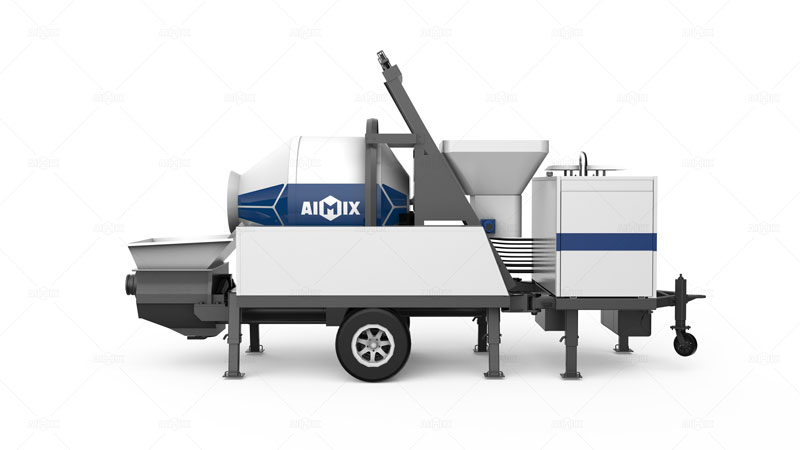
The defining characteristic of Nepali construction is the struggle against elevation and isolation. Traditional ready-mix concrete delivery, reliant on large transit mixer trucks, is effectively incapacitated by the country’s terrain. The roads are often too narrow, the gradients too severe, and the bridges too weak. A small concrete pump fundamentally resolves this access crisis. Its compact footprint allows it to be positioned on constrained urban plots or narrow mountain shoulders. From this single, strategically placed location, the pump’s pipeline system—comprised of lightweight, connectable sections—can be extended over significant distances, ascending steep inclines or traversing ravines to deliver concrete precisely to the formwork.
Servicing High-Altitude and Geologically Unstable Sites
In the mountainous regions, the challenge intensifies. Rebuilding villages damaged by seismic activity or constructing new hydropower facilities in deep gorges requires delivering concrete to points unreachable by road. Small pumps, often trailer-mounted and transportable by light trucks or even modified utility vehicles, can be mobilized to these remote depots. Their ability to generate sufficient head pressure—often exceeding 100 bar—enables them to pump concrete vertically over hundreds of meters or horizontally across rugged terrain. This capability eliminates the need for costly and dangerous intermediate handling, such as manual transport by porters or aerial ropeways, directly linking the source of production to the placement point with minimal labor and maximum consistency.
Urban Infill and Post-Earthquake Reconstruction Agility
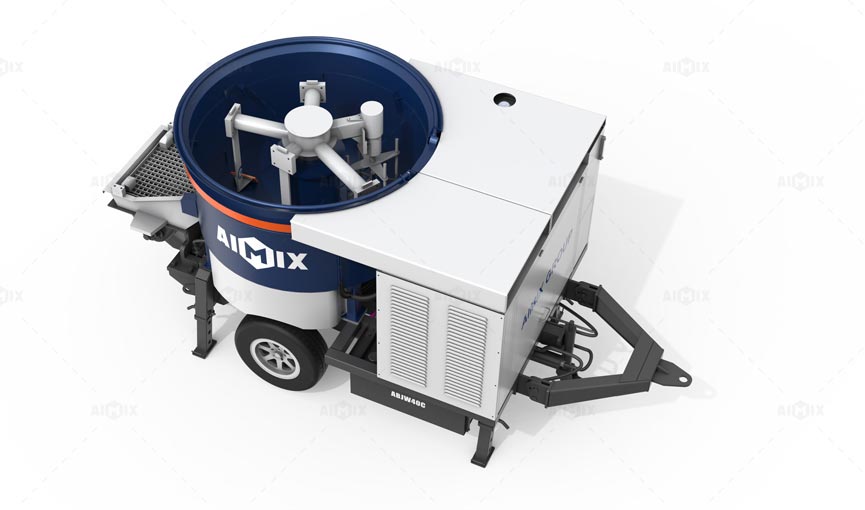
Within the Kathmandu Valley, the challenge is density. Post-earthquake reconstruction initiatives must operate within a labyrinth of narrow streets and close-proximity structures. A standard concrete pump truck cannot navigate these constraints. A small, often electrically powered concrete line pump can be stationed at the nearest accessible road, with its pipeline snaking through pedestrian pathways and into confined construction sites. This enables the efficient reconstruction of schools, hospitals, and residential buildings without paralyzing entire neighborhoods with heavy truck traffic. It provides the logistical agility essential for a sustained, multi-year urban renewal effort.
Economic Empowerment and Localized Production Capability
The impact of this technology extends beyond physics and logistics into the realm of economics and market structure. By lowering the capital barrier to entry for mechanized concrete placement, small pumps are democratizing construction capability.
Enabling Small and Medium-Sized Contractor Growth
Historically, the capacity for high-volume, quality concrete placement was concentrated among a few large firms with access to expensive imported equipment. A small portable concrete pump for sale represents a capital investment accessible to a much broader segment of Nepali contractors. This acquisition transforms their operational profile. A local contractor can now independently undertake projects requiring significant concrete works—a multi-story building, a community bridge, or an irrigation channel—without subcontracting the pumping element. They capture the full value of the work, build technical expertise, and enhance their competitive position. This distributed ownership model fosters a more resilient and competitive construction sector.
Stimulating Local Supply Chains and Reducing Import Dependence
Furthermore, the operational model of these pumps often favors localized material sourcing. Instead of relying on centrally produced ready-mix concrete transported over long distances, contractors can establish small, site-specific batching operations using locally sourced aggregates and cement. This reduces the carbon footprint and transportation costs associated with construction and circulates capital within local economies. It also insulates projects from the volatility of fuel prices and the frequent disruptions to national supply routes, enhancing project predictability and timeline adherence.
Structural Integrity and Resilience in a Seismic Environment
Nepal’s high seismic risk mandates exceptional construction quality. In this context, the mini concrete pump for sale contributes not just to efficiency, but to enhanced structural performance and long-term resilience.
Improving Material Consistency and Placement Quality
Traditional manual placement methods are inherently variable. The quality of concrete produced on-site by hand mixing and transported by wheelbarrow is subject to inconsistent water addition, segregation, and inadequate compaction. A pump system, fed by a batching plant or self-loading mixer, delivers concrete that is homogeneous and at the specified workability directly into the formwork. This continuous, controlled placement process minimizes cold joints, ensures proper consolidation around reinforcement, and achieves the design strength more reliably. For structures intended to withstand seismic forces, this quality assurance is not an amenity; it is a fundamental safety requirement.
Facilitating Modern Construction Methodologies
The adoption of pumping technology also enables the use of modern, high-performance concrete mixes. Self-consolidating concrete (SCC), which flows under its own weight and eliminates the need for mechanical vibration, is exceptionally difficult to place manually but ideal for densely reinforced seismic frames. A small pump is the perfect delivery mechanism for such advanced materials, allowing Nepali engineers and architects to specify and utilize these superior construction technologies. The small concrete pump, therefore, functions as a conduit for technological transfer, bringing global best practices in structural engineering to the unique and demanding context of Nepali infrastructure development. It is, in essence, a discreet but powerful agent of modernization, moving not just concrete, but the very capacity of a nation to build safely, efficiently, and sustainably from its deepest valleys to its highest peaks.