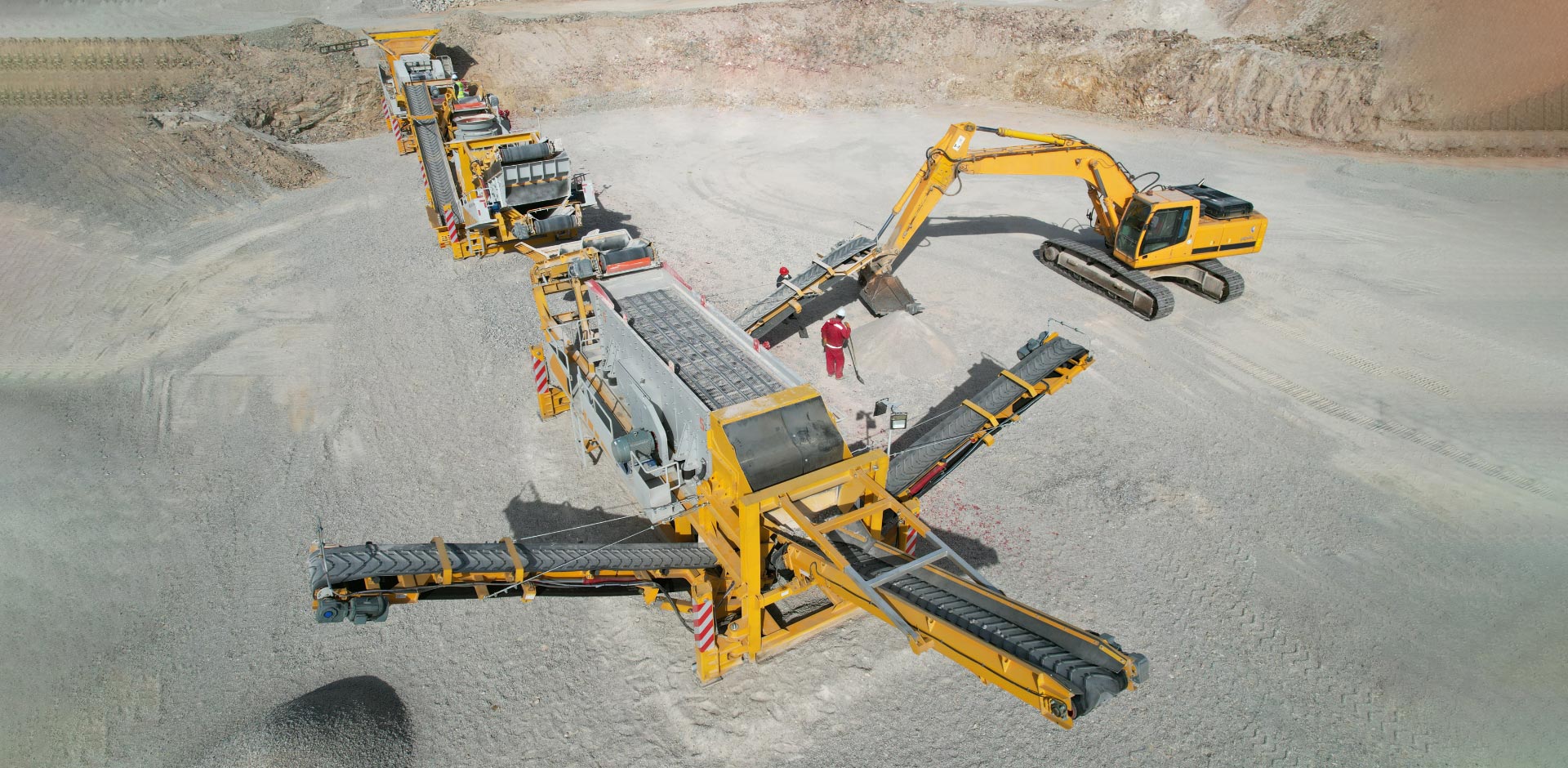
Urban infrastructure development across Latin America is accelerating. Governments are investing heavily in highways, metro systems, housing programs, bridges, and public facilities to support population growth and economic expansion. However, these projects increasingly face strict environmental regulations, community scrutiny, and sustainability standards. As a result, the selection of a mobile stone crusher for urban projects is no longer based solely on production capacity. Environmental performance, operational flexibility, and compliance with urban regulations are now critical factors. This article analyzes the technical and operational requirements for environmentally friendly mobile stone crushers used in Latin American urban infrastructure projects.
Urban Infrastructure Development and Environmental Pressure
Major cities in Latin America such as São Paulo, Mexico City, Lima, and Bogotá are expanding rapidly. Urban construction sites are often located close to residential areas, commercial districts, and sensitive public facilities. This proximity places significant pressure on contractors to control dust, noise, emissions, and traffic impact.
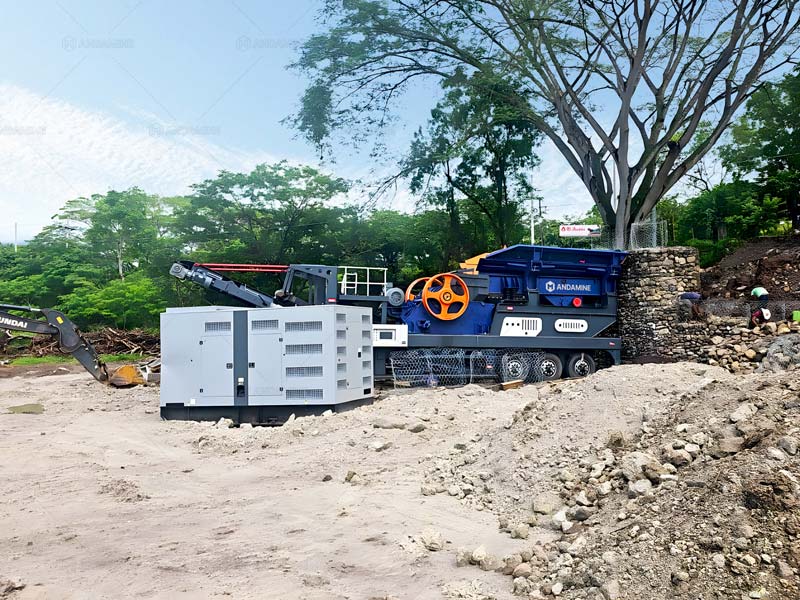
Traditional stationary crushing plants are often unsuitable for dense urban environments because of their large footprint and heavy civil work requirements. In contrast, a portable stone crusher(trituradora de piedra portátil) or mobile stone crusher provides flexibility and reduced environmental disturbance. However, mobility alone is not sufficient. Equipment must meet specific environmental and operational standards to be viable in modern urban projects.
Key Environmental Requirements for Mobile Stone Crushers
Advanced Dust Suppression Systems
Dust emission is one of the primary environmental concerns in urban crushing operations. Fine particulate matter can affect nearby communities and lead to project shutdowns or regulatory penalties. Therefore, a modern mobile stone crusher must incorporate integrated dust control systems.
Effective solutions include water spray systems at feed inlets and discharge points, enclosed conveyor belts, and optional dust collectors. High-efficiency atomization nozzles reduce airborne particles without excessive water consumption. In dry regions of Latin America, water management is also critical, so recycling systems for spray water are increasingly important.
Both jaw crusher and impact crusher configurations used in mobile plants should be designed with sealed crushing chambers and optimized airflow to limit dust escape. Without these features, even a high-capacity unit may fail to meet urban environmental standards.
Low Noise Design
Noise pollution is another critical factor in urban infrastructure projects. Crushing operations generate mechanical vibration and acoustic emissions that can disturb nearby communities. Modern portable stone crusher systems must integrate noise reduction technologies such as sound-insulated engine compartments, vibration-dampening chassis structures, and low-noise hydraulic systems.
Electric-driven mobile stone crusher models are increasingly favored in urban settings because they significantly reduce engine noise compared to diesel-powered units. Where grid access is available, electric solutions not only lower acoustic impact but also reduce exhaust emissions.
Reduced Emissions and Energy Efficiency
Latin American countries are progressively adopting stricter emission standards for construction equipment. Contractors must ensure that diesel engines comply with recognized emission regulations. Additionally, hybrid or fully electric drives are gaining popularity for projects located within city boundaries.
Energy-efficient crushing chambers, optimized rotor speeds in impact crusher units, and advanced control systems reduce fuel consumption. Lower energy usage not only supports environmental compliance but also reduces the overall price of stone crusher(precio de trituradoras de piedra) operation over the project lifecycle. In urban infrastructure projects where margins are tight, operational cost efficiency is as important as initial investment.
Operational Flexibility in Urban Environments
Beyond environmental considerations, operational adaptability plays a decisive role in project timelines and profitability.
Compact Structure and Easy Transport
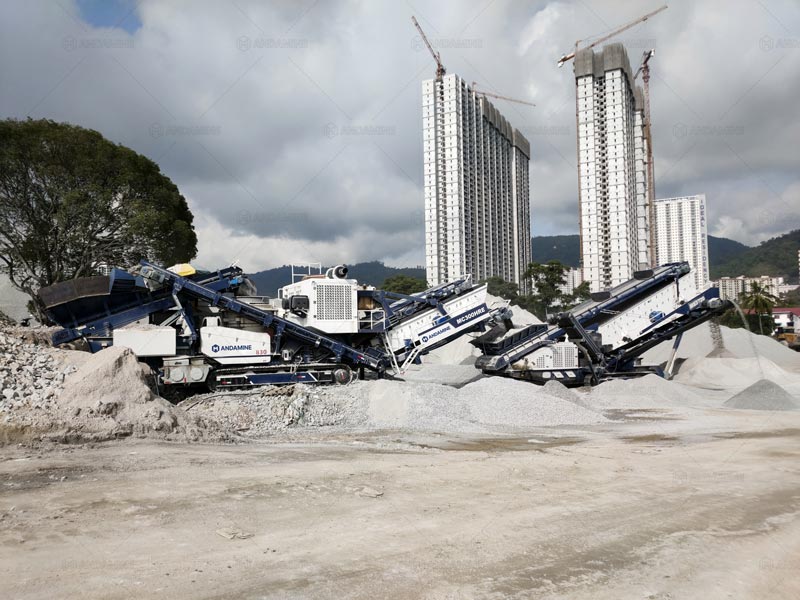
Urban construction sites often have limited space. A compact mobile stone crusher design allows easier maneuverability within restricted job sites. Integrated feeding, crushing, and screening modules reduce the need for additional auxiliary equipment.
A portable stone crusher with a foldable conveyor system and hydraulic support legs can be deployed quickly and relocated as project phases shift. This mobility minimizes material transport distances within the city, reducing truck traffic and associated emissions.
Quick Installation and Commissioning
Time constraints in infrastructure projects require rapid equipment deployment. Unlike traditional stationary plants, a mobile stone crusher can be delivered to site and begin operation within a short period. Pre-assembled modules reduce civil works, which is especially beneficial in urban areas where construction permits may restrict foundation work.
Fast commissioning ensures that aggregate production aligns with project schedules. Delays in aggregate supply can halt concrete production and road base installation, directly impacting overall construction timelines.
Crusher Type Selection for Urban Applications
Jaw Crusher for Primary Crushing
A jaw crusher(trituradora de mandíbulas) is typically used for primary crushing in mobile applications. It is highly efficient in reducing large stones and construction waste into manageable sizes. For urban infrastructure projects involving demolition recycling or road reconstruction, jaw crushers are ideal for handling mixed materials, including reinforced concrete.
Modern jaw crusher designs focus on energy efficiency, reduced vibration, and automated gap adjustment systems. These features improve both environmental performance and productivity.
Impact Crusher for High-Quality Aggregates
An impact crusher is often selected for secondary crushing when producing high-quality aggregates for asphalt and concrete. It delivers better particle shape, which is essential for urban road construction and structural concrete applications.
In environmentally sensitive areas, impact crushers equipped with variable speed drives allow operators to adjust output according to material hardness, optimizing fuel consumption and reducing unnecessary wear. The flexibility of switching between jaw crusher and impact crusher configurations enhances the adaptability of the overall mobile stone crusher system.
Economic Considerations and Long-Term Value
Contractors frequently focus on the initial price of stone crusher equipment. However, for urban infrastructure projects, total lifecycle cost is more relevant. Environmental compliance failures can result in fines, project suspension, or reputational damage, all of which exceed the savings from choosing low-cost equipment.
An environmentally friendly mobile stone crusher may require a higher initial investment, but it reduces fuel consumption, maintenance frequency, and environmental risk. Furthermore, equipment that complies with strict urban standards can be redeployed across multiple projects in different cities, increasing asset utilization rates.
Government infrastructure funding in Latin America increasingly emphasizes sustainable procurement practices. Contractors equipped with environmentally compliant portable stone crusher units are better positioned to win public tenders.
Digital Monitoring and Smart Control Systems
Smart control systems are becoming standard in advanced mobile stone crusher designs. Remote monitoring allows operators to track fuel consumption, emission levels, crushing efficiency, and maintenance status in real time. Predictive maintenance reduces unexpected downtime and ensures stable performance.
Automation also helps maintain consistent aggregate quality, which is essential for urban infrastructure standards. With integrated sensors and intelligent control platforms, operators can optimize crusher settings without manual intervention, improving both environmental performance and operational precision.
Conclusion
Urban infrastructure development in Latin America demands equipment that balances productivity with environmental responsibility. A modern mobile stone crusher must go beyond simple mobility and high output. It must incorporate advanced dust suppression, low-noise technology, emission control systems, and energy-efficient crushing mechanisms. Whether configured with a jaw crusher for primary reduction or an impact crusher(trituradora de impacto) for refined aggregates, the system must operate within strict urban environmental regulations.
Although the initial price of stone crusher equipment is an important factor, contractors should prioritize long-term operational efficiency, compliance reliability, and adaptability. Environmentally friendly portable stone crusher solutions not only reduce ecological impact but also enhance competitiveness in public infrastructure tenders. As cities continue to modernize, sustainable crushing technology will play a vital role in shaping the future of urban construction across Latin America.